Definition
A meta description is an HTML tag summarising a page's content. Search engines may use it as the snippet beneath the title in a result, though they often generate their own from the page instead. It is not used as a ranking factor.

Why it matters
The meta description does not affect ranking and does affect clicks, which makes it unusual: a pure conversion lever sitting inside a channel people treat as a ranking problem.
Google has said for years that it is not used for ranking, and its guidance on snippets describes it as one input into the snippet rather than as the snippet itself. Both halves of that are worth knowing before spending time on it.
How it works
The tag sits in the head alongside the title tag:
<meta name="description"
      content="A meta description summarises a page for search results. Whether it affects ranking, why Google rewrites it, and how to write one that earns the click." />
Google generates snippets per query. If the description you wrote answers the query, it may be used. If the query is better answered by a passage inside the page, Google will usually show that passage instead, with the matching words in bold. Research Google has published on snippets puts the proportion of rewrites high, and anyone comparing their own descriptions against live results will see it.
That changes what a good description is for. It is the fallback and the brand-query snippet, not a billboard you can count on. Writing one is still worth it; expecting it to always appear is not.
There is no hard length limit, only a display limit that varies by device. Google's SEO starter guide asks for descriptions that summarise the page accurately rather than hitting a count. Around 155 characters is the working figure, and the useful discipline is to put the distinguishing information first.
Worked example
Three descriptions for the same page:
- Keyword list
"meta description, meta tag, seo meta description, meta description length, how to write meta description"
- Restates the title
"What is a meta description? Learn about meta descriptions."
- Earns the click
"A meta description summarises a page for search results. Whether it affects ranking, why Google rewrites it, and how to write one that earns the click."
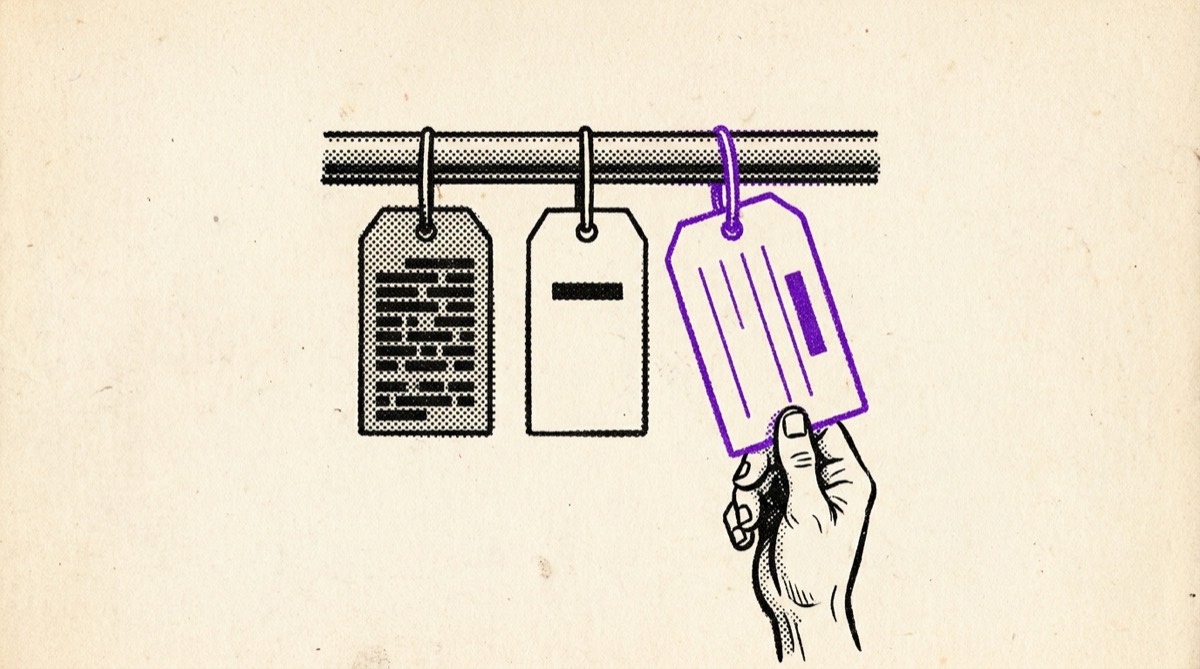
The third works because it tells a scanner what questions the page answers. The format that reliably performs is: what this is, then what you will get.
Common mistakes
- Leaving it empty and hoping.Google will generate something, and for a brand query it may pull an unhelpful fragment. The fallback is worth writing.
- Duplicating it across pages.Identical descriptions on many pages invite rewriting and tell a scanner nothing.
- Stuffing keywords.It does not help ranking, because it is not a ranking factor, and it reads badly to the person deciding whether to click.
- Writing past the limit.Anything beyond roughly 155 characters is likely cut, so the important part goes first.
- Treating a rewrite as a bug.If Google consistently shows a passage from your page instead, that passage is answering the query better. Consider moving it up the page.
How to tell if yours are working
Position and CTR per query in Search Console. A page holding position with a CTR below its neighbours is usually losing the click on the SERP itself, and the title and description are the two things you control there. That is the measurable half of on-page SEO, and it is faster feedback than anything ranking-related.