Definition
A pillar page is a page that covers a broad topic in full and links out to narrower pages that each handle one part of it in depth. Those pages link back to it. The arrangement groups related content so both readers and search engines can see how the pieces relate.

Why it matters
A pillar page solves a structural problem. A site with forty articles about one subject, none linking to each other, is forty pages competing for attention. The same forty arranged around a pillar is one subject covered thoroughly, with an obvious entry point.
It is also the practical route to topical authority: covering a subject completely rather than publishing whatever came up this month.
How it works
The structure is a hub and its spokes.
The pillar targets the broad term and covers the whole subject at a level that is genuinely useful on its own. It is not a table of contents. A page that only introduces links has nothing to rank with.
The cluster pages each take one part of the subject and go deeper than the pillar does, which is how helpful content guidance describes covering a topic properly. Each links back up to the pillar, and across to the siblings it genuinely relates to.
What makes this work is internal linking rather than any special page type. Google's SEO starter guide asks for a logical structure that groups related pages, which is what this produces. Google has no concept of a pillar page; what it sees is a well linked group of pages on one subject, which is exactly what the arrangement produces.
Worked example
Our own SEO section is built this way:
/seopillar: what SEO is and how we do it/seo/technicalcrawling, indexing, performance/seo/on-pagetitles, structure, internal links/seo/contentwhat to publish and why/seo/link-buildingearning references/seo/localmap results and local search
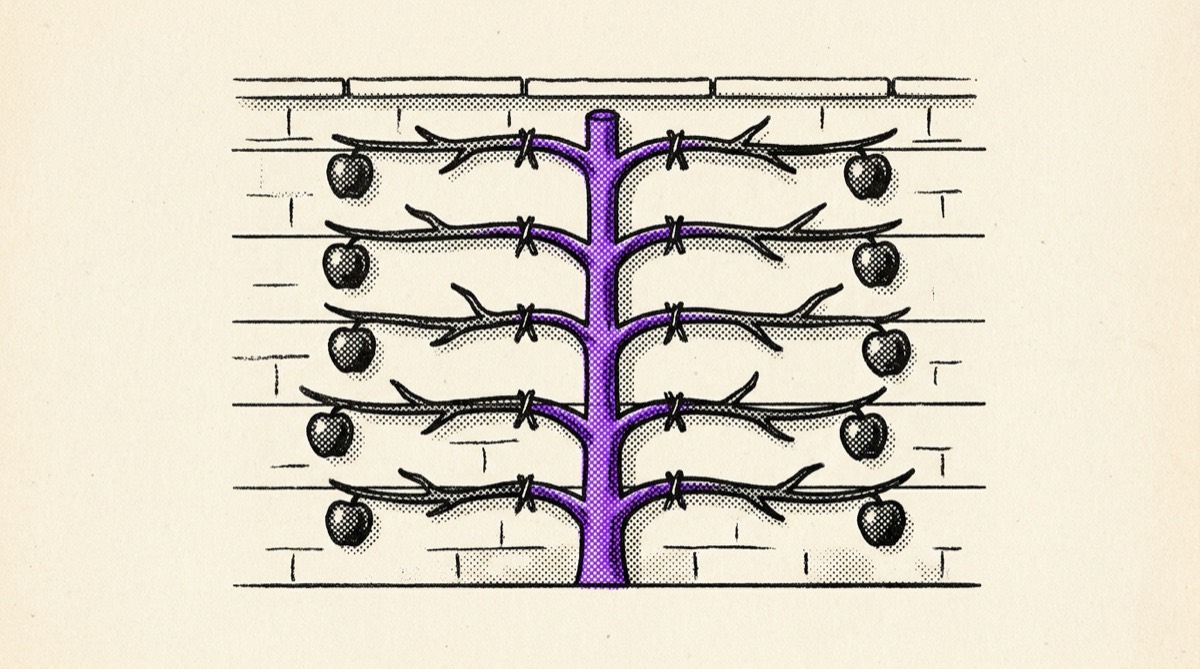
Each child covers its part in more depth than the pillar can, and links back. The sideways links, for example from technical to on-page where the subjects actually touch, are the ones that have to be written deliberately.
Common mistakes
- Writing a pillar that is only links.It needs to answer the broad question itself, or it is a navigation page competing for an informational search.
- Clusters that repeat the pillar.If a child page says what the pillar already said, the two compete, which is keyword cannibalisation by construction.
- Linking down but never up or across.One directional linking leaves the cluster pages isolated from each other.
- Choosing a topic too narrow for a cluster.If you cannot name five genuinely distinct sub-topics, the subject wants one good page, not six thin ones.
- Publishing the pillar last.Publish it first, even if it is lean, so the children have something to link to as they arrive.
When it is the wrong shape
Not every subject needs one. A topic with one real question and one answer should be one page. The arrangement earns its complexity when a subject genuinely has distinct parts that different people search for separately, and when you intend to cover all of them. Three cluster pages and an abandoned plan is worse than one thorough article, and it is a common outcome when the structure is chosen before the SEO content plan is.